The Thesis: One Chokepoint, Three Markets, Multiplicative Risk
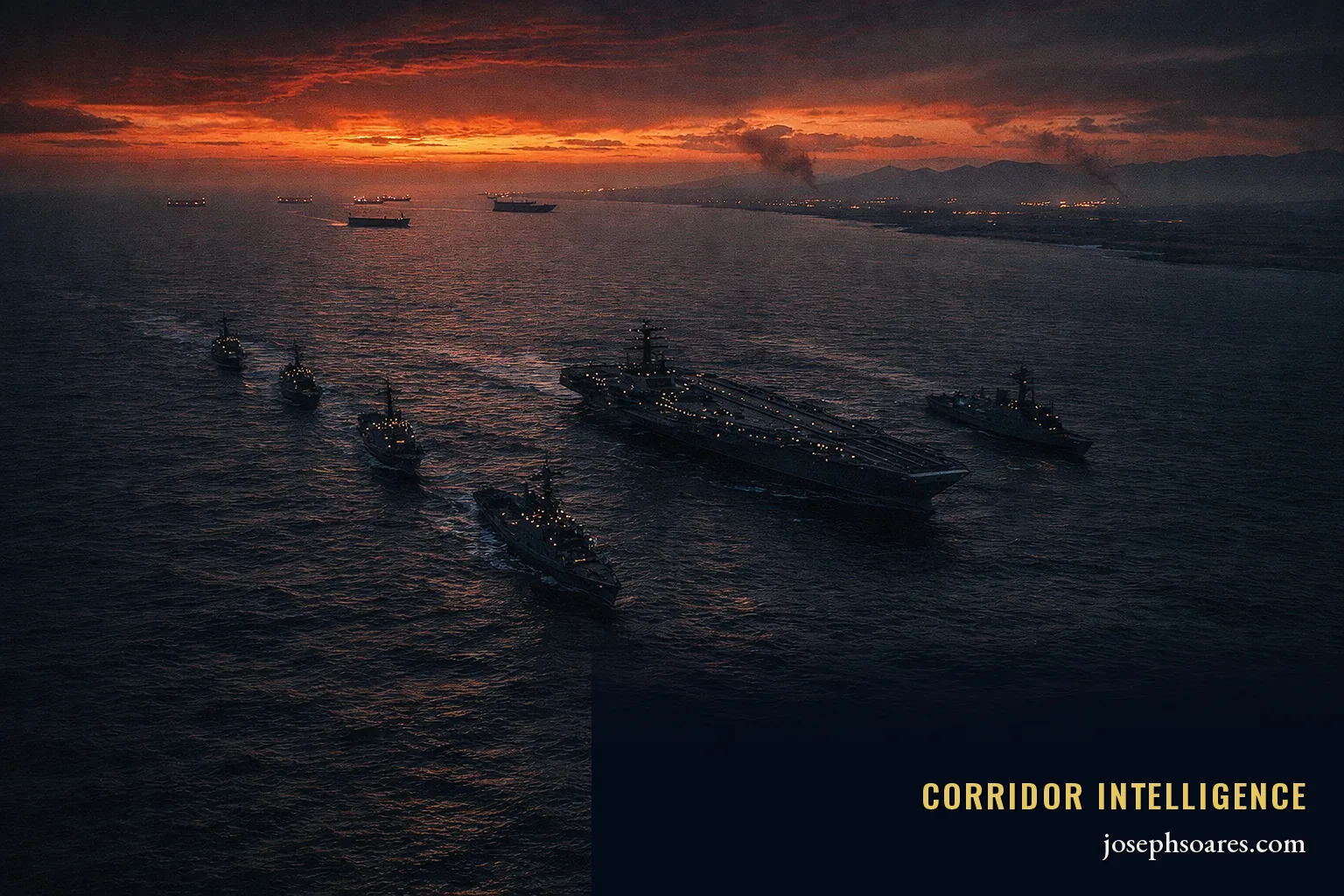
The closure of the Strait of Hormuz is being priced as an oil event. That is the first mistake. Hormuz is not an oil valve. It is a chokepoint sitting astride three separate global markets that most analysts track in three separate silos—energy, industrial gases, and agricultural inputs. Qatar supplies roughly 25% of the world’s helium. The Gulf is a major fertilizer exporter. And the crude, of course, is the crude. When one strait constrains all three at once, the correct mental model is not addition. It is multiplication.
Here is why the distinction matters for your next decision. Additive shocks are survivable because they are legible—you can see the line item, hedge it, pass it through. Multiplicative shocks are dangerous precisely because the failures compound across domains that your risk committee reviews on different days, in different meetings, using different vocabularies. The helium desk does not talk to the ag desk. Neither talks to the energy desk. The strait does not respect that org chart. That is the gap I want you looking at.
The Mechanism, Stripped of Acronyms
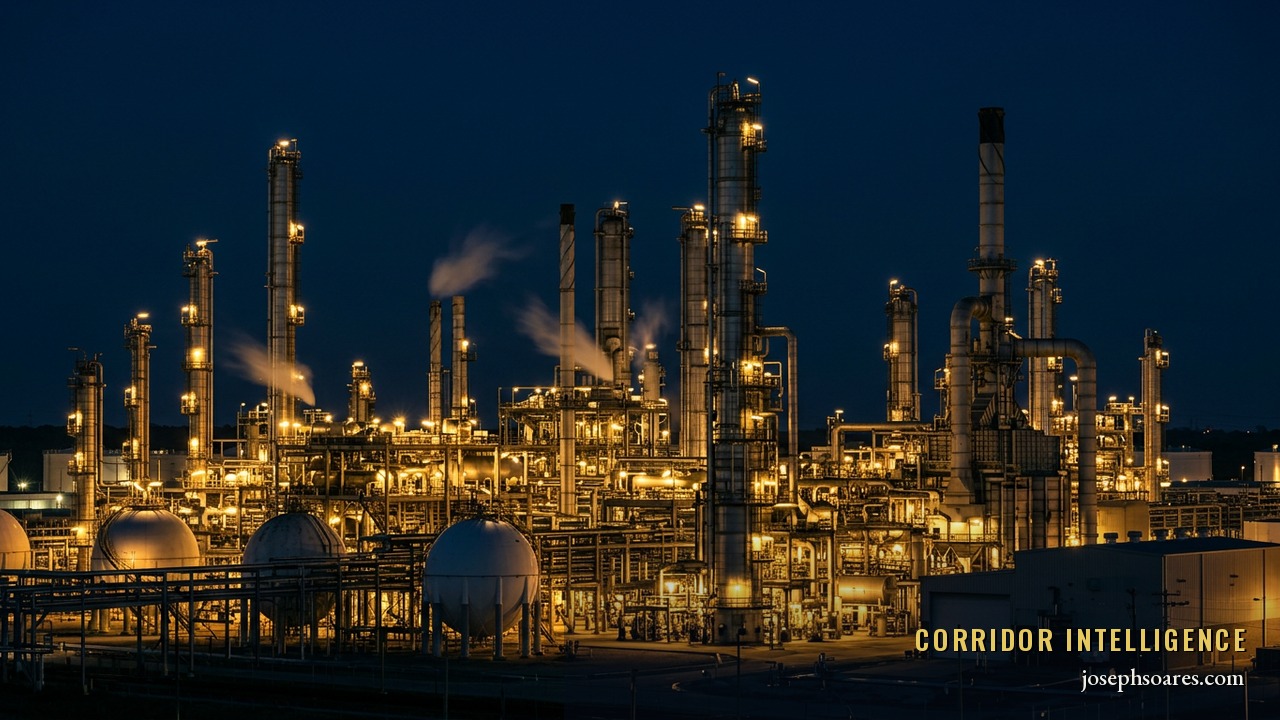
Start with helium, because it is the one nobody is watching. Helium is not a convenience gas for balloons. It is the coolant and carrier gas that makes advanced semiconductor fabrication possible—it cools the magnets, purges the chambers, and enables the processes that etch modern chips. There is no substitute at the physics level. Qatar sits at roughly a quarter of global supply, and that supply moves through the same waters as the oil. Constrain the strait and you do not merely raise the price of a niche gas. You introduce friction into the single input that sits upstream of everything electronic. Chips go into cars, servers, medical devices, weapons systems, payment terminals, and the data centers now underwriting a trillion dollars of AI capital expenditure. Helium is the quiet keystone. Pull it and the arch does not weaken gracefully; it finds a new equilibrium several steps down.
Now fertilizer. The Gulf is a major exporter of nitrogen-based fertilizer, itself a child of cheap regional natural gas. Fertilizer is not an agricultural line item. It is the multiplier on yield per acre. Constrain the supply and you do not get a marginal cost increase—you get a planting-season decision made by millions of farmers who cannot afford the input, which shows up as a harvest shortfall two quarters later, which shows up as food-price inflation three quarters after that. And food-price inflation is the most politically combustible number in the world. Every serious student of instability knows the sequence: bread before ballots, bread before barricades. The 2008 spike and the unrest that followed the 2010–2011 food-price surge were not coincidences. Fertilizer is where a shipping-lane problem becomes a governance problem.
Then oil—the market everyone is already modeling. Oil is transport and it is baseload energy, which means it is the cost floor under nearly all physical activity. A Hormuz-driven crude spike raises the price of moving every good, including the fertilizer and the helium and the chips that the same strait is already constraining. This is the hinge of the entire argument. The oil shock does not sit beside the other two. It amplifies them, because it raises the delivered cost of the very things that are simultaneously getting scarcer. Scarcity and transport-cost inflation arriving together, on the same goods, from the same cause. That is the multiplicative structure in one sentence.
Why Conventional Analysis Underestimates It
Sell-side models are built to isolate variables. That is their virtue in calm markets and their blind spot in a compound shock. An oil analyst models oil. A chemicals analyst models fertilizer. A semiconductor analyst models chips. Each produces a defensible single-variable estimate, and the sum of those estimates badly understates the total, because none of them captures the cross-terms—the way a helium constraint and an oil spike and a fertilizer shortfall reach into the same supply chains at once. The correlations that were near zero in normal conditions go to one under stress. Institutions that diversified across sectors discover they diversified across symptoms of a single cause. That is the 2008 lesson restated in commodities: the risk was never in any one instrument. It was in the assumption that the instruments were independent.
The Operator’s Framework: Tracing Second-Order Exposure
Here is the discipline I would put in front of any board this quarter. Stop asking “what is our oil exposure” and start asking “what single physical fact are we implicitly assuming stays constant.” For most portfolios, the unexamined assumption is chokepoint continuity—that goods keep moving through a handful of straits. Once you name the assumption, trace it in three moves.
First, map inputs to their true origin, not their invoice. Your chip supplier is not your exposure; the helium two tiers upstream is. Second, look for shared root causes across unrelated line items—when the same geography appears behind your energy cost, your food-linked consumer demand, and your electronics supply, you are not diversified, you are concentrated in a way your spreadsheet is hiding. Third, ask where compounding lands: which of your counterparties, customers, or sovereign exposures absorbs all three shocks at once. That entity is your real point of failure, and it is almost never on your dashboard.
The move to make now is not to trade the oil headline. It is to run the chokepoint-continuity assumption through your book before the correlation goes to one. The advantage in a multiplicative shock does not go to whoever reacts fastest. It goes to whoever mapped the second-order exposure while everyone else was still pricing the first.