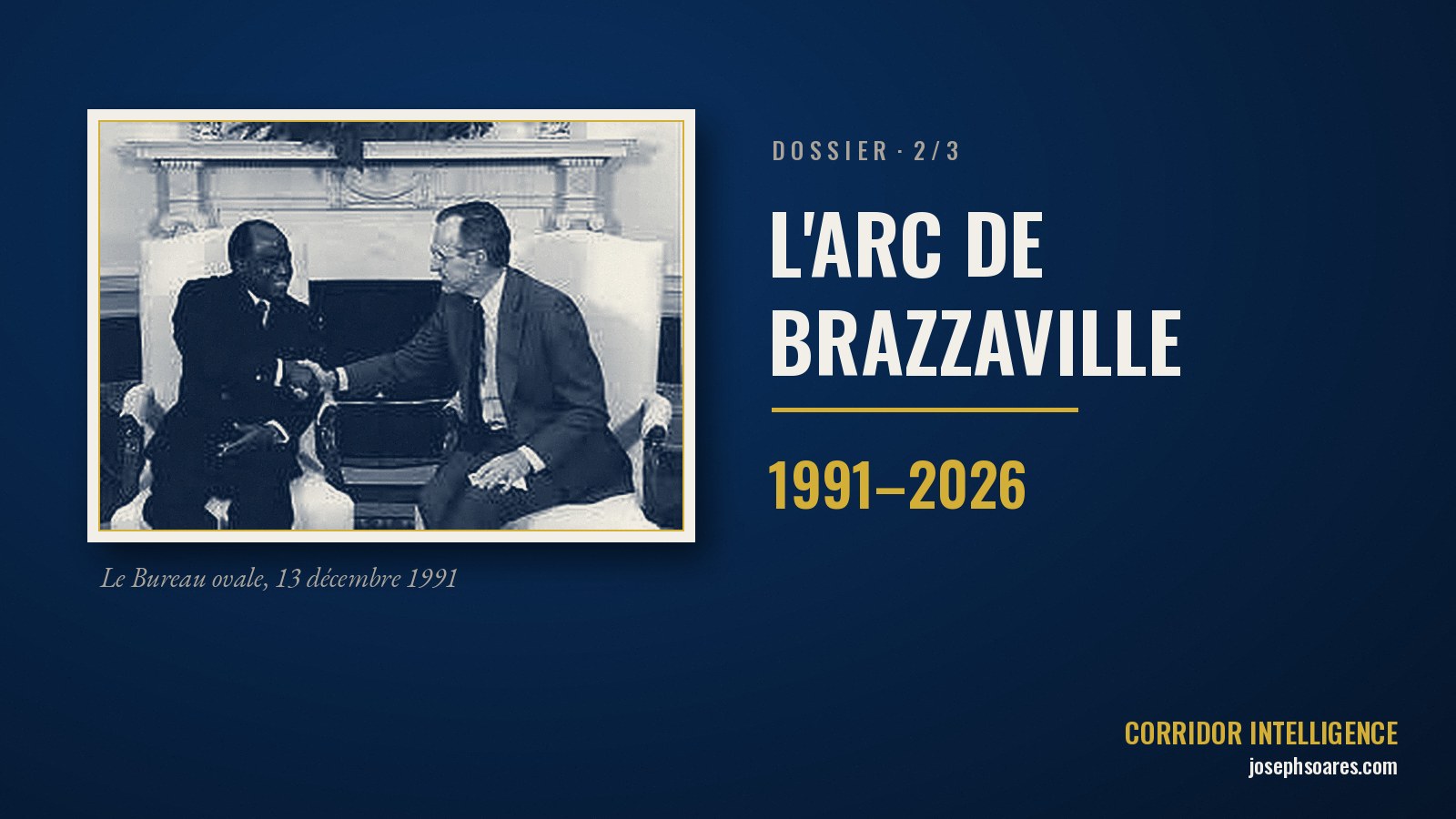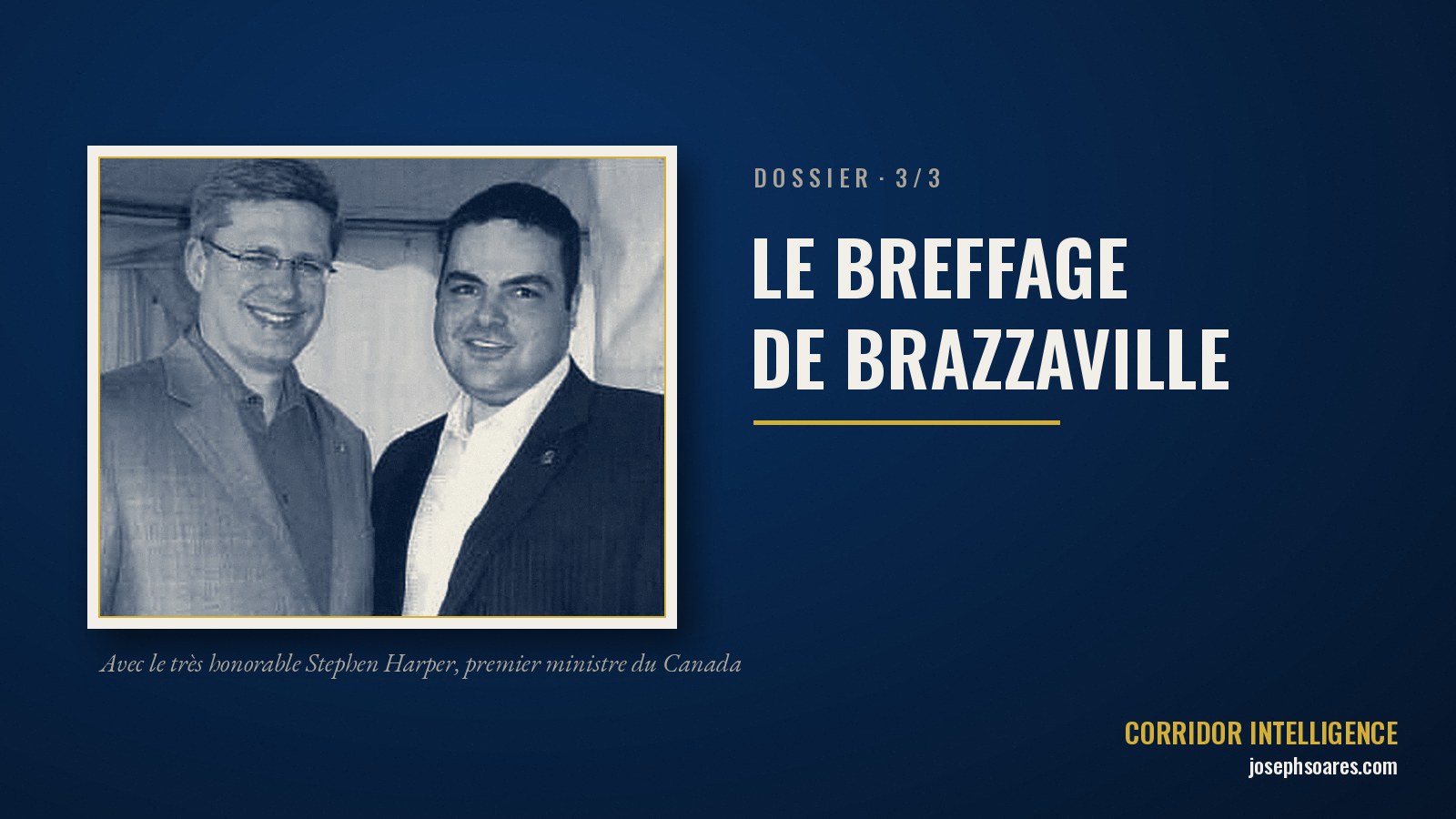
This dossier opened with a ledger — the Congo's public finances, figure by figure. It continued with an archive — ten minutes in the Oval Office in 1991, where everything had already been said. This third part changes register. It takes the form real decisions take: a briefing — not what anyone should do, but what the government could consider. The picture first, then the choices. Every figure comes from the first two parts or carries its own source; the orientations are the author's, and they align, where indicated, with the institutions' published recommendations.
The Situation, on One Page
Here is the starting point. The budget shows a headline surplus: +0.9% of GDP in 2025 [WB]. And yet debt stands at 97.2% of GDP, the country is classified in debt distress by the joint IMF–World Bank analysis, and gross financing needs peaked at 27.2% of GDP in 2025 [IMF 2026] [DSA 2026]. The state owes US$3.38 billion in unpaid obligations — suppliers, salaries, pensions, scholarships — nearly a quarter of GDP [DSA 2026]. One resident in two lives below the US$3-a-day line [WB]. And oil, which supplies most of the state's revenue, decides everything else.
That is the knot: the money comes in, but the room to manoeuvre does not exist. This briefing is about one thing — how it could be restored. Four worksites, in order.
Worksite 1 — See Clearly, and Show It
You cannot repair what you cannot see. In 1991, the transitional prime minister told the President of the United States that the producers of his country's oil "won't turn over their books" [Memcon 1991]. In 2017, the EITI process measured that only about 13% of the proceeds of the State's oil sales reached the treasury [EITI]. The first decision costs nothing and changes everything else: publish the accounts — oil revenues, debt, arrears — regularly, completely, legibly. Finish what is already begun and points the same way: the treasury single account and the SIGFIP financial-management system, which the IMF urges be brought to completion [IMF 2026]. Transparency is not a concession to lenders. It is a government's first working tool — no state can be steered whose numbers cannot be seen.
Worksite 2 — Pay What the State Owes Its Citizens
The social third of domestic arrears — salaries, pensions, scholarships [IMF 2024] — is not an accounting line like the others. A civil servant who is paid is a family that spends locally; a pensioner who is paid is trust returning to the state's word. The IMF has quantified the discipline required: devote at least 2% of GDP per year to clearance, under a strategy running to the early 2030s — and audit the 2021–2023 arrears, which has still not been done [IMF 2024]. The rule of conduct is simple to state: not one new social arrear, and a published clearance calendar anyone can verify. It is the gesture that ties worksite 1 to the rest: visible accounts, and debts honoured in the order announced.
Worksite 3 — The Asset No One Can Copy: Pointe-Noire
The Congo holds a geographic advantage that sixty years of difficulty have not dented. The container terminal at Pointe-Noire is, in its operator's words, "the only deep-water port in the subregion with direct access from the sea": a 16-metre draught, an access channel dredged to 16.50 metres, 1,500 metres of quay, capacity for 1.2 million containers (TEU) a year, more than 600,000 handled to date — against 150,000 in 2009 [Congo Terminal]. Behind the port: the Congo-Océan railway, 512 kilometres to Brazzaville — which is to say, to the river, and across the river, Kinshasa and its market of tens of millions. The line, built between 1921 and 1934, deteriorated to the point that flows moved to the road; the state announced a rehabilitation in 2026, estimated at US$595 million [Ecofin 2026].
The strategic logic fits in one sentence: Pointe-Noire is not only the Congo's port — it is a natural gateway to Central Africa, from Gabon to Angola and on to the DRC. The steps deduce themselves, in order: a port authority governed to international standards, with public accounts; the railway restored — the execution, not the announcement; then, anchored to the port, a special economic zone run on established practice — clear rules, a single window, predictable taxation — for import-processing-re-export to the subregion. Each step holds only if the one before it holds. A transparent port attracts shipping lines; a reliable railway attracts shippers; a credible zone attracts factories — which create jobs and broaden the state's tax base.
Worksite 4 — Produce What the Country Consumes
The fourth worksite begins on the plate. A country that imports most of its food is vulnerable twice — in its balance of payments and in its national security. The first rung of industrialization is therefore agri-food: processing, preserving, packaging locally what the country produces. Then come the first transformations of natural resources: timber into building products rather than logs; hydrocarbons into finished products rather than crude alone. The World Bank presses the country, in the same terms, to convert its natural capital into produced and human capital and to diversify away from oil dependence [WB].
The method counts as much as the goal, and it is known: temporary, declining, pre-announced protections — the time, five to ten years, to build baseline capacity — with tax-free investment inside the dedicated zones, supplier diversification, and local-content requirements that rise in steps. Temporary and declining: that is the condition separating an industrial policy from a rent. And the Congolese advantage here is real: a country of 6.3 million people [WDI] can decide, adjust and correct at a speed large states never know.
What the First Move Decides
None of these worksites requires a miracle. South Korea started in 1960 from an income per person comparable to the Congo's [WDI] — with no oil, no deep-water port waiting to be built on, no continental hinterland. What was learned there can be learned here: clear rules, applied to everyone, for a long time. The sequence fits in four lines, and the first one costs nothing: show the books; pay what the state owes; build on the port; produce what the country consumes.
In 1991, in the Oval Office, a Congolese prime minister was asking for exactly this — to see the accounts, to pay the salaries, to recover a margin [Memcon 1991]. The question of this dossier has never been who to blame. It is how much longer the first move will keep waiting.
Scope of the evidence — and the nature of this text. This third part is an exercise in synthesis in the form of a briefing — what the government could consider, in light of the documents cited. The figures come from the sources linked: the institutional documents of the first two parts (IMF, World Bank, joint DSA, EITI, the 1991 memorandum), the technical sheet published by the operator of the Pointe-Noire container terminal, the government's announced Congo-Océan rehabilitation as reported by the specialized press, and the World Development Indicators. The orientations — the order of the worksites, the port strategy, the local-production policy — are the author's; they align with the IMF's published recommendations (transparency, treasury single account, arrears clearance, base broadening) and the World Bank's (diversification away from oil) where the text so indicates, and otherwise rest on established development-policy practice. This text is an exercise in reflection — it targets no person and passes judgment on no leader and no party.