The Two Numbers That Did Not Make the Front Page
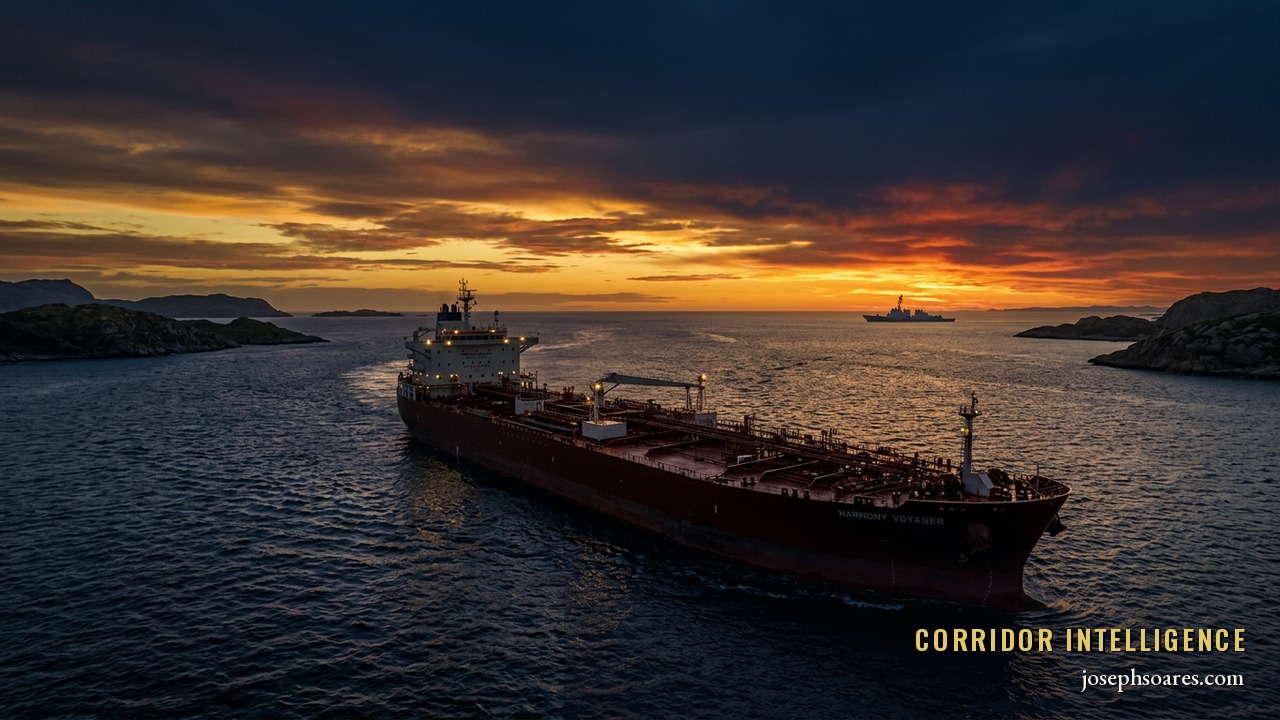
Five hundred thousand dollars a day. That is what it now costs to charter a very large crude carrier out of the Gulf to Asia. The working baseline for that route has been twenty to sixty thousand dollars a day. One inside-Hormuz cargo fixed this week at roughly thirty-one million dollars for a single voyage.
Five point three four per cent. That is where the thirty-year US Treasury yield reached on Tuesday — its highest level since 2007, a nineteen-year high, with the national debt approaching forty trillion dollars and last month's federal deficit at four hundred and thirty-two billion, the widest monthly gap since 2021.
Neither number was the story this week. The story was that Washington paused its fifty per cent tariff on Canadian goods three days before it bit. That Brent held around ninety-one dollars instead of running to a hundred and twenty. That the market's fear gauge sat at a 2026 low while a war deadline expired with no deal.
Relief, in other words. The system absorbed the shock.
It did absorb it. The question almost nobody asked is where. And the answer is that this week the war and the trade fight stopped repricing prices and started repricing plumbing — the cost of capital, the cost of movement, and the cost of compliance. Plumbing does not unwind on an announcement. That is the whole dispatch.
What Happened, Compressed
You read the Briefs, so we will move quickly.
Canada. The fifty per cent duty on roughly twenty billion US dollars of Canadian goods was due Wednesday. Trump paused it three days and announced a deal. Ottawa did not publish one. Carney confirmed only a suspension to end of day Friday and said substantial progress had been made with important work still to be done. By Thursday the Prime Minister was asking provinces to lift their bans on US alcohol sales as part of the package. That is a government spending domestic political capital to buy an extension, which tells you the text does not exist yet.
Hormuz. The sixty-day US-Iran negotiating window expired Monday with nothing agreed. Transits, which ran at roughly a hundred and twenty to a hundred and thirty vessels a day before the war, went to five on the Saturday and none registered on the Sunday. A projectile struck a vessel in transit, ending the argument that only state-carrier tankers were targets. Chinese tankers turned back. Chinese refiners moved to Iraqi barrels. Japan's import bill hit an all-time high. And a South Korean containership set out to test the Arctic route to Europe.
Washington's second front. Having failed to produce Iranian capitulation through strikes and a naval blockade, the administration opened economic warfare on Iran's counterparties — naming financial institutions, airports, ship registries, exchange houses and front companies in third countries. The UAE severed all trade and financial dealings with Tehran. France expelled two Iranian diplomats. Tehran, revealingly, answered by warning that the measures threaten the entire global financial system — an appeal aimed at central banks and payment systems rather than at capitals.
The long end. The thirty-year touched 5.34 per cent Tuesday. Canadian thirty-year yields hit their highest since 2010, French long yields reached 2008 levels, German ten-years their highest since 2011. On Wednesday the Treasury doubled its long-end buyback operations — from a two-billion-dollar maximum to a four-billion-dollar minimum per operation, and from two operations a quarter to four, effective 9 September. The thirty-year fell to 5.18 per cent and the dollar sank to a three-month low. The same day, the July Fed minutes showed the committee held at 3.50 to 3.75 per cent on a nine-to-three vote, with three regional presidents dissenting in favour of a hike and two non-voters saying they would have joined them.
And the quiet governance story. Washington cut the length and scope of joint exercises with South Korea on the President's order because the Iran theatre is consuming carriers. Seoul learned about it from the announcement.
Why the Consensus Read Is Incomplete
The consensus read is resilience. Tariff paused, oil contained, volatility at a low, long yields off their highs by ten basis points on a Treasury intervention. The market concluded that the system has more absorptive capacity than feared.
The system does have absorptive capacity. What it does not have is a mechanism for giving back what it just paid.
Consider what actually happened at each of the three points where the cost landed.
Freight repriced because vessels, crews and war-risk cover are the scarce inputs — not barrels. That is why tanker earnings went up roughly tenfold while crude went up roughly a quarter. And here is the part that matters: Chinese refiners did not wait for the strait to reopen. They bought Iraqi. Korean carriers did not wait either; they went to test the Arctic. Rerouting is expensive to do once and cheap to keep doing. Every contract signed around Hormuz this month is a contract that has no reason to come back when Hormuz reopens.
Capital repriced because of deficits, issuance and foreign selling — not because of the policy rate. The Fed is holding at 3.50 to 3.75 with a hawkish minority pressing to go higher. The thirty-year is at nineteen-year highs regardless. Those are two different prices set by two different mechanisms, and only one of them is under anyone's control. The Treasury's buyback expansion is a liquidity operation, not a fiscal correction. It bought ten basis points and a calmer tape. It did not retire a dollar of the underlying issuance.
Compliance repriced because the target set moved from Iran to everyone who touches Iran. A firm with Gulf, Turkish or Asian payment and freight exposure now carries a screening obligation it did not carry in July — on counterparties, on routing, on payment rails. That cost is permanent in the way legal and compliance costs are always permanent: the perimeter widens, and it does not narrow when the conflict ends.
Three prices. None of them announced. None of them reversible by press conference. Meanwhile the two things that did get announced — a Canadian deal with no text, and Hormuz control that vessel counts contradict — changed nothing that a business can bank.
The Corridor Angle
For capital. Stop running two discount rates. Many plans built after 2021 still carry a financing assumption anchored to the policy rate, on the theory that the long end eventually follows the Fed down. It has not, and this week's Fed minutes removed the last argument that it will soon. Re-run every capital project, refinancing and valuation at the long-end level, not the target-rate level. Treat this week's ten-basis-point rally as a window to issue rather than a signal to re-lever. When the long end reprices globally — Ottawa, Paris and Berlin alongside Washington — the cost of capital rises for every borrower regardless of credit quality or jurisdiction, and there is nowhere to arbitrage to.
For operators. Your landed-cost model probably watches Brent. Brent is now the least informative line in it. Freight, war-risk insurance and routing are moving faster and further, and they are the lines that determine what a delivered unit actually costs. Rebuild the model around the transit count and the charter rate. Then, separately, screen your counterparty book for Iran-adjacent exposure — banks, freight forwarders, exchange houses, registries — this week, not next quarter. The perimeter widened on Wednesday.
For Canada. Two things are true at once, and they point the same direction. The first is defensive: price Q4 landed cost as though the tariff is live, keep tariff-inclusive contract language in place, and treat any relief as upside rather than baseline. A three-day pause attached to an unpublished deal is a scheduling change. The second is the opportunity, and it is larger than the tariff. A Korean containership testing the Arctic route to Europe is what a permanent rerouting decision looks like in its first week. If Hormuz and the Red Sea stay unreliable, Arctic governance, ice-class capacity and northern port and rail infrastructure move from a 2040s file to a live commercial question — and Canada owns the geography. That is a positioning decision, not a shipping story, and it will be made in the next eighteen months whether or not Ottawa participates.
We have watched governments manage under this kind of compound pressure before. I served in Canada's Prime Minister's Office during the 2008 financial crisis, and as Chief of Staff in the Senate during the 2020 pandemic. What our team took from both is that the announceable variable and the governing variable are rarely the same one, and that institutions under strain reach for the announceable one first because it is the only lever that moves inside a news cycle. That is not cynicism about the people involved. It is a description of the incentive. The operator's job is simply to know which lever is which — and to build on the one that is still there on Monday.
The governance failure worth noting is the Seoul one. An ally learning of a change to its own defence posture from a news release is a separate problem from the merits of the decision. It is also a preview: any plan that assumes allied predictability — in supply chains, in market access, in security — now needs a stated fallback and a named owner.
What To Do, What To Watch
Do four things. Re-run your capital plan at the long-end rate. Rebuild landed cost around freight and insurance rather than around the crude print. Screen the counterparty book for third-party Iran exposure. And hold your Canadian tariff-inclusive pricing through the weekend, whatever gets announced on Friday.
Watch four gauges into next week. Whether a Canada-US text is actually published, or whether Friday produces another extension. Whether VLCC rates hold above four hundred thousand dollars a day once the immediate scarcity eases — that tells you whether the rerouting is structural or panic. Whether the thirty-year settles back above 5.30 per cent after the buyback effect fades, which would confirm that the intervention bought calm rather than a trend. And whether any second Gulf state follows the UAE in cutting commercial ties with Tehran, which would move the conflict from a shipping problem into a payments problem.
The headline this week was relief. The bill was paid in the plumbing — in the discount rate, the charter rate and the compliance perimeter — and none of those three lines has a mechanism for going back.
The Briefs will be tracking all four gauges daily next week, ranked by decision impact, as they happen.