Press & Media Resources

Media Kit

Everything journalists, producers, and event organizers need. Bio, photos, expertise areas, interview questions, and contact — all in one place.

media@josephsoares.com LinkedIn

About Joseph Soares

Joseph Soares is a strategic advisor, keynote speaker, and geopolitical commentator specializing in crisis leadership, institutional decision-making, and global business risk. He advised Prime Minister Stephen Harper during the 2008 global financial crisis and served as Chief of Staff at the Senate of Canada during the COVID-19 pandemic. His analysis and commentary have been published in Forbes and Newsweek. Joseph holds an MBA, PMP, Adm.A., and ACC, and operates through IBPROM Corp. He is trilingual in English, French, and Portuguese. Based in Ottawa-Gatineau, Canada, he advises senior leaders and organizations navigating high-stakes decisions.

Joseph Soares is a strategic advisor, keynote speaker, and published commentator who has spent more than 30 years operating at the intersection of government, business, and crisis management. He brings institutional-grade credibility to every engagement — earned not through theory, but through direct experience under pressure at the highest levels of Canadian government.

Joseph served as a direct advisor to Prime Minister Stephen Harper during the 2008 global financial crisis, contributing to the strategic response that helped Canada navigate the worst economic disruption in a generation. He later served as Chief of Staff at the Senate of Canada during the COVID-19 pandemic, leading institutional operations through a period of unprecedented disruption and constitutional complexity.

His analysis and commentary on geopolitics, leadership, and global business risk have been published in Forbes and Newsweek, reaching audiences across North America and internationally. He is the creator of the SPARK Framework — a proprietary methodology for building organizations that perform under pressure, structured around five pillars: Strategic Alignment, People Optimization, Adaptive Innovation, Relationship Capital, and Key Decision-Making.

Joseph holds an MBA, Project Management Professional (PMP) certification, Chartered Administrator (Adm.A.) designation, and Associate Certified Coach (ACC) credential. He is trilingual in English, French, and Portuguese, and regularly delivers keynotes and workshops in all three languages.

Through IBPROM Corp., Joseph advises senior executives, business owners, and high-net-worth individuals on strategic decisions, crisis preparedness, and organizational leadership. His clients are leaders who have built something significant and want to protect it, grow it, or translate it into lasting legacy. He is currently based in the Ottawa-Gatineau region of Canada and available for speaking engagements, advisory work, and media commentary across North America, Europe, and globally.

Photos

High-Resolution Images

For press use. Right-click to save or contact media@josephsoares.com for original high-resolution files.

Professional Headshot

Replace with:
images/headshot-primary.jpg
Primary Headshot
Professional portrait. Suitable for print and digital use.
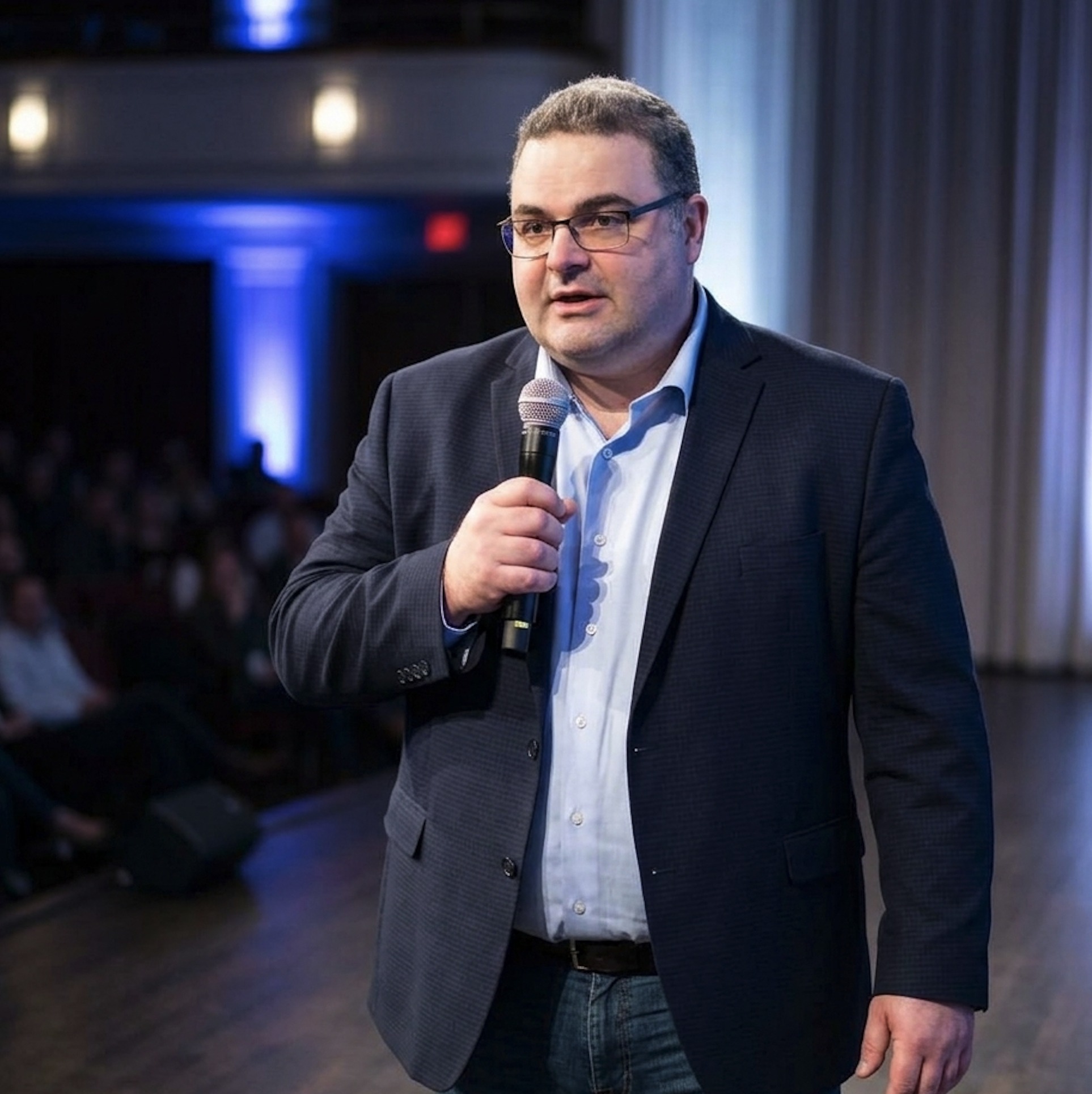
Speaking / Event Shot

Replace with:
images/speaking-action.jpg
Action Shot
Speaking or professional setting. Shows presence and authority.
Alternate Portrait

Replace with:
images/headshot-alternate.jpg
Alternate Portrait
Business casual or editorial variant. For feature profiles.
Photo Guidelines: All images may be used for editorial, media, and event promotional purposes. Credit: "Joseph Soares" or "Courtesy of Joseph Soares." For commercial use, contact media@josephsoares.com.
Areas of Expertise

What Joseph can speak to.

Joseph is available for interviews, commentary, panels, and analysis on the following topics.

Crisis Leadership & Institutional Decision-Making
How organizations and governments make high-stakes decisions under pressure. Drawing from direct experience advising during the 2008 financial crisis and the COVID-19 pandemic.
Geopolitical Risk & Global Business Strategy
Iran and Middle East escalation, energy market disruption, supply chain vulnerability, US-Canada trade dynamics, and the strategic implications for business leaders and investors.
Canadian Politics, Federal-Provincial Relations & Quebec
Federal fiscal transfers, Quebec sovereignty and economic policy, Canada-US relations, energy policy, and the political economy of Canadian federalism.
AI, Automation & the Future of Professional Work
How artificial intelligence is transforming decision-making, organizational structure, and competitive advantage. A strategic perspective, not a technical one.
Leadership, Trust & Influence in High-Stakes Environments
Building trust with powerful decision-makers, managing influence in institutional settings, and the personal disciplines that sustain leadership under sustained pressure.
Portugal, the Lusophone World & Transatlantic Business
Portuguese diaspora, Azorean heritage, business opportunities in Portugal and Lusophone Africa, and cross-cultural leadership across language and geography.

Key facts at a glance.

Government Service
Advisor to Prime Minister Stephen Harper (2008 Financial Crisis). Chief of Staff, Senate of Canada (COVID-19 Pandemic).
Publications
Published in Forbes and Newsweek. Commentary on geopolitics, leadership, and global business risk.
Professional Credentials
MBA · Project Management Professional (PMP) · Chartered Administrator (Adm.A.) · Associate Certified Coach (ACC)
Languages
Trilingual: English, French, Portuguese. Available for interviews and speaking in all three languages.
Organization
IBPROM Corp. — Strategic advisory firm. In business since 2010. Gatineau, Quebec, Canada.
Heritage
Azorean Portuguese heritage with deep roots in Fenais da Ajuda, São Miguel, Portugal.
Interview Preparation

Suggested Questions

Pre-prepared questions for journalists, podcast hosts, and moderators. Joseph is comfortable going off-script — these are starting points, not constraints.

You advised a Prime Minister during a global financial crisis. What did that experience teach you about leadership under real pressure?

+
Working at the highest levels of government during a crisis taught me that the quality of a decision is determined less by the information available and more by the decision-making structure around it. When the 2008 crisis hit, we didn't have the luxury of perfect information — no one did. What mattered was the speed and clarity of the response, the alignment of the people in the room, and the discipline to adjust course when new information emerged. That experience shaped my belief that most organizations fail in crises not because they lack intelligence, but because they lack a decision framework that works under pressure. That's what I bring to every client engagement and every keynote.

What are the biggest geopolitical risks that business leaders should be watching right now?

+
Three things keep me up at night on behalf of the business leaders I advise. First, energy supply chain vulnerability — particularly in the Strait of Hormuz and the Red Sea. Any escalation in the Middle East directly impacts global energy prices and supply chain stability. Second, the restructuring of global trade alliances. The world is moving from a rules-based order to a power-based order, and businesses that haven't stress-tested their supply chains and market dependencies are exposed. Third, the speed of AI adoption creating a competence gap between organizations that integrate it strategically and those that treat it as a technology problem. Each of these is a strategic risk, not a headline — and the businesses that will thrive are the ones making decisions about them now, not when the crisis hits.

What is the SPARK Framework, and why did you develop it?

+
SPARK stands for Strategic Alignment, People Optimization, Adaptive Innovation, Relationship Capital, and Key Decision-Making. I developed it because I saw the same pattern repeating across government, corporate environments, and entrepreneurial ventures: organizations that perform well under pressure share five characteristics, and organizations that collapse under pressure are typically missing one or more of them. SPARK isn't a theory — it's a synthesis of what I've observed working inside rooms where the stakes were highest. It gives leaders a structured way to evaluate whether their organization is genuinely prepared for disruption, or just hoping disruption doesn't come.

You're trilingual and have Azorean heritage. How does that shape your perspective on global business?

+
Growing up in a Portuguese-Canadian household, moving between languages and cultures from an early age, gave me an instinct for reading rooms — understanding not just what people say, but what they mean, and what they're not saying. That's an asset in any advisory or leadership context. On a practical level, trilingual fluency in English, French, and Portuguese gives me access to North American, European, and Lusophone markets in a way that most advisors can't match. The Lusophone world — Portugal, Brazil, Angola, Mozambique — represents enormous business opportunity, and very few people in the North American advisory space can operate across those markets with genuine cultural fluency.

What's the single biggest mistake leaders make in a crisis?

+
Waiting. The riskiest move in a crisis is doing nothing. I've seen this at every level — government, corporate, entrepreneurial. When pressure hits, the instinct is to gather more information, consult more advisors, wait for conditions to clarify. But conditions don't clarify during a crisis — they deteriorate. The leaders who navigate crises successfully are the ones who accept imperfect information, make a decision, communicate it clearly, and adjust course in real time. Speed and clarity beat perfection every time. That's not recklessness — it's discipline.

How should business leaders think about AI — beyond the hype?

+
AI is not a technology problem. It's a leadership problem. The organizations that will win with AI are not the ones that deploy the most tools — they're the ones that fundamentally rethink how they make decisions, allocate resources, and develop talent. I run an AI-first practice myself. I use AI at every layer of my business — not because it's trendy, but because it gives a solo operator the reach and capability of a much larger organization. That's the real lesson for leaders: AI is a force multiplier, but only if you've already aligned your strategy, your people, and your decision-making structure. Without that foundation, AI just accelerates your existing dysfunction.

What kind of clients do you work with, and what do they have in common?

+
My clients are successful, experienced leaders — typically self-made entrepreneurs, active or semi-retired business owners, and high-net-worth individuals. They've built something significant and they're at a point where they need a strategic thinking partner who has been tested under real pressure. What they have in common is that they don't take people seriously until those people have earned it. I connect with this profile because I've earned it — not through credentials alone, but through having been in the room when the stakes were highest. They want directness, credibility, and someone who will challenge their thinking, not validate it.

Media Contact

For interview requests, commentary, speaking inquiries, or high-resolution images. Typical response time: same business day.

Media Inquiries
Speaking Bookings