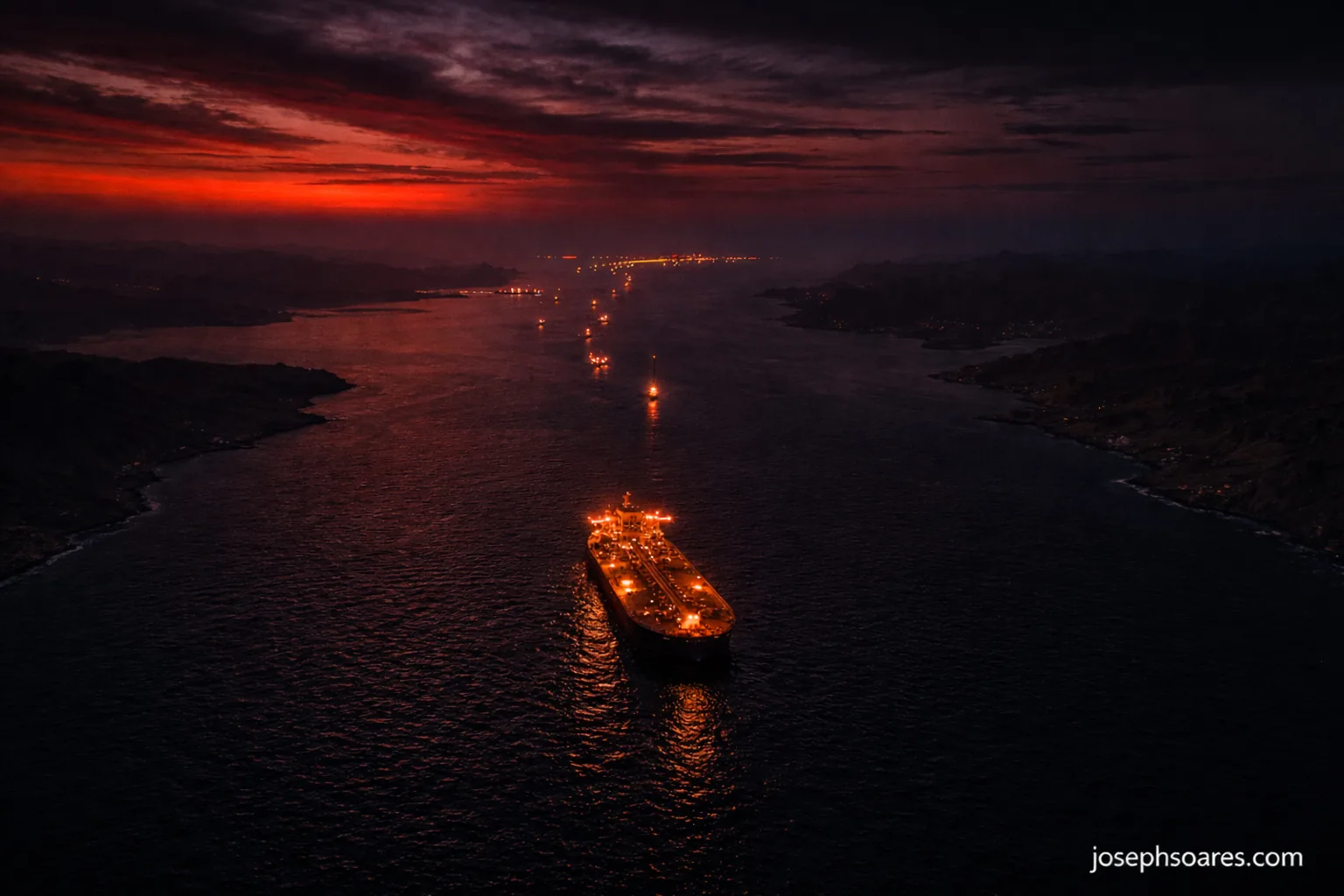
Peace talks in Islamabad collapsed on April 11. By morning, CENTCOM had enforced what Trump ordered: a complete blockade of the Strait of Hormuz. Enforcement began April 13 at 10 a.m. ET. All vessels originating from or destined for Iranian ports are now barred. Freedom of navigation for all other traffic is maintained.
This is the single most important maritime action since the Kennedy administration quarantined Cuba in 1962. About 20% of the world's oil passes through that strait. The price implications are already visible. Oil futures jumped 7% overnight.
Iran's negotiating position didn't collapse by accident. It collapsed because Iran's demands were designed to be rejected.
What Iran Demanded
The regime walked into Islamabad asking for three things:
One: Unrestricted nuclear enrichment. Not monitored. Not capped. Complete freedom to develop whatever weapons program Iran chooses.
Two: Control of the Strait itself. Sovereignty over chokepoint that controls 20% of global oil flows.
Three: War reparations from the United States.
These aren't negotiating positions. These are maximalist statements designed to be non-negotiable. The regime walked in knowing the US would reject every demand, and knowing rejection would trigger exactly what happened: military enforcement.
This is a regime that needs conflict. Conflict is how it justifies its existence to its own people. External pressure validates the narrative of encirclement and aggression. Without it, the Iranian population might ask uncomfortable questions about why their economy is cratering while regime elites get wealthy.
Why This Matters
For business leaders: this is an energy supply story, a commodity pricing story, and a supply chain story all at once. If you have exposure to the petroleum complex, the shipping business, insurance or logistics, or any input that depends on energy pricing, you should have seen this coming last week. Everyone else is reacting now.
The blockade doesn't come as a surprise to anyone paying attention. The Trump administration signaled it weeks ago. The real question is how long it holds and what the economic consequences look like.
Oil at $140 has structural impacts. Petrochemicals, fertilizers, plastics, fuel costs, industrial production—all of it is indexed to the Hormuz rate. Companies that positioned months ago are ahead. Companies still trying to figure out supply chain adjustments are behind.
If you're not already stress-testing your supply chain against $130+ oil, you should be.
The Regime's Impossible Position
Iran now faces a strategic choice with no good options:
Option One: Accept the blockade. This crushes Iranian oil export revenue and accelerates the regime's isolation. Economically devastating.
Option Two: Attempt to run the blockade. CENTCOM is ready. This triggers military escalation and potentially a regional conflict.
Option Three: Return to negotiations and accept constraints on enrichment. This requires abandoning the maximalist position and essentially capitulating.
Every option is worse than the status quo. This is why the regime walked into Islamabad making impossible demands. Better to trigger the blockade on maximalist grounds than to negotiate from weakness.
The Iranian people deserve better than this regime. What comes after is for them to decide. What's clear is that the regime has chosen the path that maximizes external threat, which is exactly what it needs to survive internally.
What Comes Next
Expect the blockade to hold as long as the Trump administration remains in office. The political will is there. The military readiness is there. The only variable is whether Iran attempts to test CENTCOM's resolve.
If Iran attempts to run the blockade, expect a military response. If it accepts the blockade, expect accelerating economic pressure on the regime. If it returns to the table, the US will demand even more stringent terms than before—because capitulation under pressure invites further pressure.
The Strait will likely remain functionally closed to Iranian traffic. Oil will remain elevated. Shipping costs will remain elevated. Every business exposed to energy inputs should plan on this as the baseline for the next 12-24 months.
The leaders who positioned their portfolios last week are vindicated. The rest are managing a crisis that was entirely foreseeable.